When Carlos was 8, he helped his older brother tend a vegetable garden.
It was there, with his hands in the soil, beneath the heat of the Mexico sun, that he found the thing he loved doing most — coaxing plants to grow.
Carlos was born three months early to a mother who raised her five children alone. Complications from his premature birth meant Carlos had a range of health conditions that limited his activities as a child and often left him feeling isolated. He didn’t reach full mobility until he was 7 years old, and limited mobility prevented him from attending school until the age of 10.
In nature, Carlos found his true sense of belonging, creating elaborate gardens and encouraging hard-to-grow plants to take root and thrive.
He calls his skill “the gift that he was born with,” and throughout his now 38 years of life, nurturing things into bloom has given him purpose.
It comes as no surprise, then, that his love of plants is what bridged the more than 2,400 miles between him and his Unbound sponsor, encouraging a deep and lasting friendship.
June 09, 2026 | Supporters
What blooms from hope
A sponsor and her sponsored friend form a lasting friendship through letters and a shared love of plants
By Kati Burns Mallows
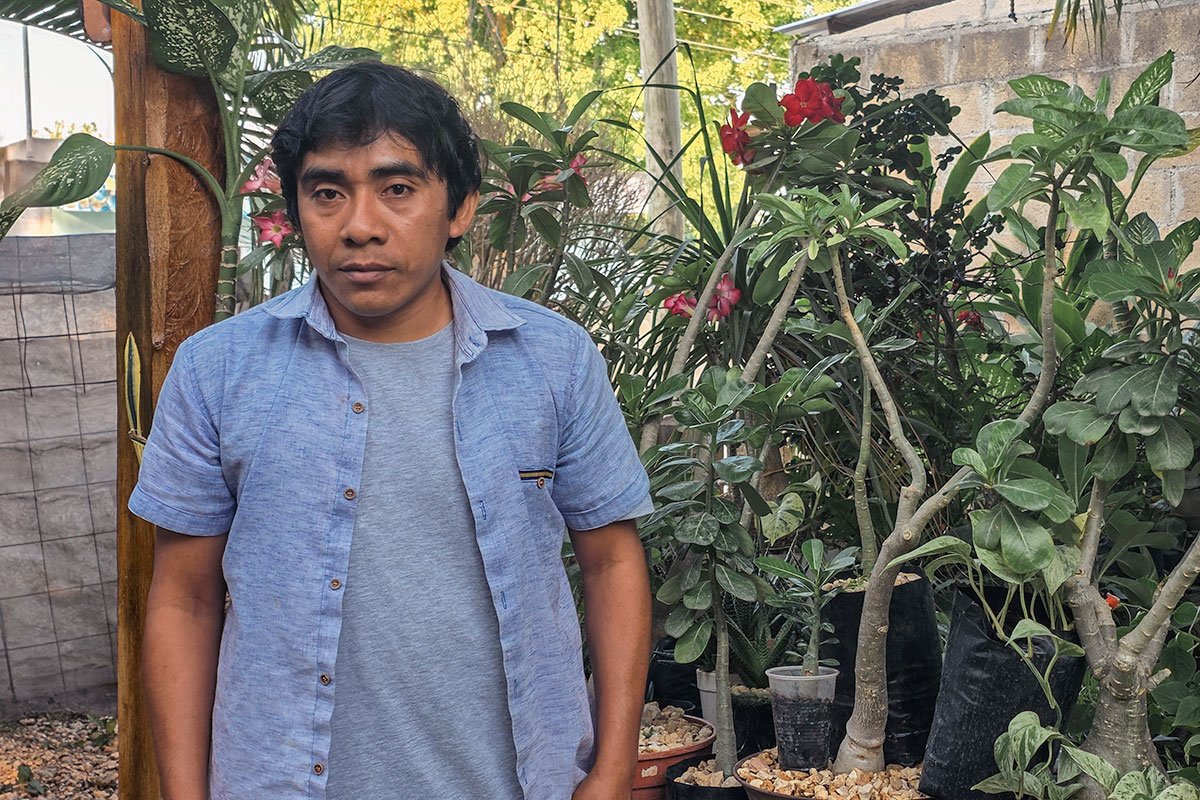
Carlos, a sponsored adult, found his talent for gardening at a young age and now grows ornamental and desert plants from the home he shares with his mother in Mexico. Gardening is both a hobby and source of income for Carlos.
A sponsor searching for a specific connection
Kelly Williams has made it her life’s purpose to help others move, feel and live better.
She is a certified corrective exercise specialist and owner of Restorative Fitness in Phoenix, Arizona. An outdoor enthusiast, Williams has spent more than 15 years of her professional career providing personalized, integrative movement therapy to clients of all ages to help restore joint and muscle health so that they can lead active, fulfilling lives and stay engaged longer in their communities.
Williams has a particular interest in health equity and focuses her community advocacy work on helping vulnerable populations get access to the medical resources they need. She serves on the board of the local Mission of Mercy organization, which offers free healthcare and resources to the underinsured.
“In my line of work, a lot of the people I end up working with are considered elders in our society,” Williams said. “But the group of people corrective exercise actually benefits the most are the medically underserved populations. People living in poverty often have more physically demanding jobs that cause shoulder or back pain, impacting their ability to work, but they don’t have access to healthcare.”
Williams learned about Unbound through a client and longtime Unbound sponsor. Noting Williams’ interest in health equity and underserved older populations, the client thought the organization would be a good connection for Williams and recommended she consider sponsoring.
Williams knew she wanted to support an adult and their health in some way. She contacted Unbound’s Sponsor Support team and spent several weeks working with them to find a sponsored friend whose situation aligned with how she thought she could best contribute.
Without their personal assistance, Williams might never have encountered Carlos. His sponsorship profile wasn’t publicly listed on the Unbound website because his situation was unique.
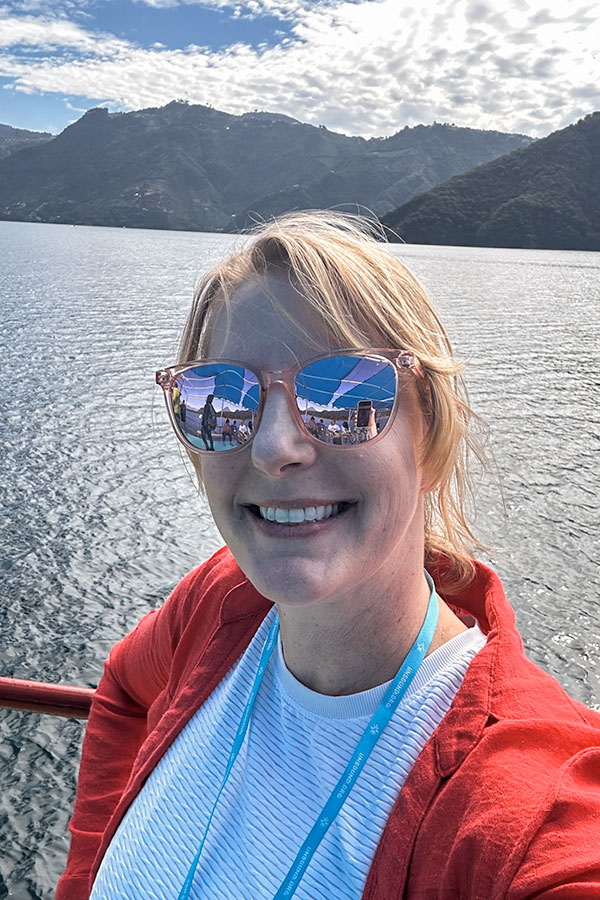
Sponsor Kelly Williams pictured at Lake Atitlán during an Unbound sponsor awareness trip to Guatemala in 2025. Kelly was introduced to Unbound sponsorship through another sponsor and knew she wanted to have a direct impact on improving the health and well-being of an adult living in poverty.
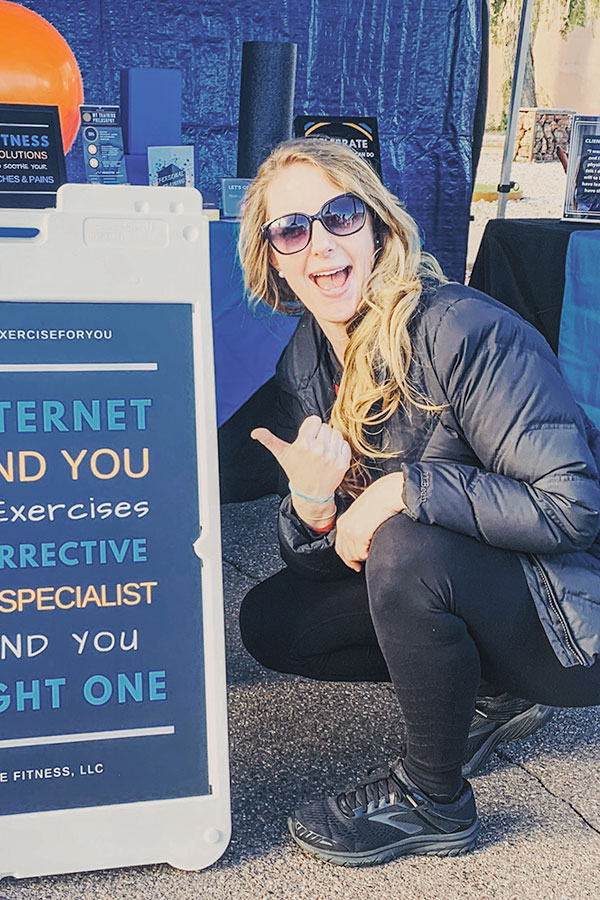
A corrective exercise specialist and owner of Restorative Fitness, Kelly is also an outdoor enthusiast who enjoys hiking, paddleboarding and kayaking, and has dedicated her career to helping others move, feel and live better.
Sponsorship was the motivation to keep moving forward
Carlos was first sponsored at the age of 13. His mother, María, remembers a time of great hardship before Unbound came into their lives.
“Honestly, it was very difficult because we lived alone, and I raised them alone,” María said. “When they grew older and could go to school, there was no food to eat. When [Unbound] visited me, it was hope they gave me, and I was very happy because it supported all of my children, not just Carlos, to be able to eat.”
At 38 years old now, Carlos has many health challenges stemming from his premature birth that require María to continue caring for him. He has a heart condition, anemia, hearing loss and a delay in his intellectual development.
Sponsorship helps María pay for Carlos’ vitamins and any healthcare he needs, and he was able to attend a school for children with special needs through the primary level.
Unbound is the largest U.S.-based international development organizations offering elder sponsorship, with more than 30,000 older adults in its programs worldwide. According to Unbound Kuxtal social worker Alma Cristina Medrano, in the Kuxtal program (the program Carlos is a part of), sponsored children with special needs are transitioned into the elder sponsorship program once they reach adulthood, and a life plan is created for them, taking into consideration their unique health challenges.
Throughout his time with Unbound, Carlos has had several different sponsors, but when Williams sponsored him five years ago through her workplace, their shared experiences quickly strengthened the bond of friendship.
Williams, who is near the same age as Carlos, personally navigated similar health challenges over the years, and while they had some health challenges in common, when they exchanged letters, it was the topic of plants that really led their friendship to blossom.
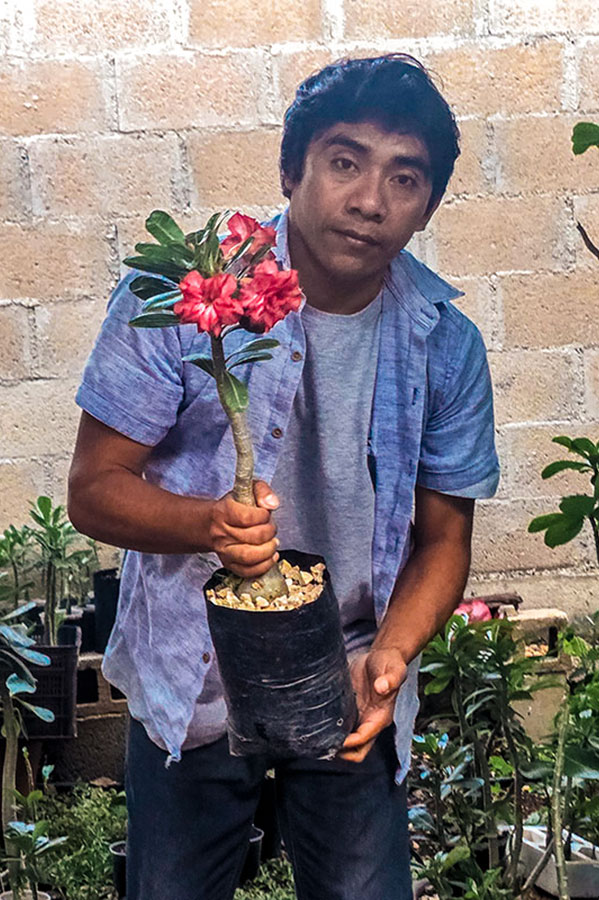
Carlos, 38, is part of Unbound's elder sponsorship program.
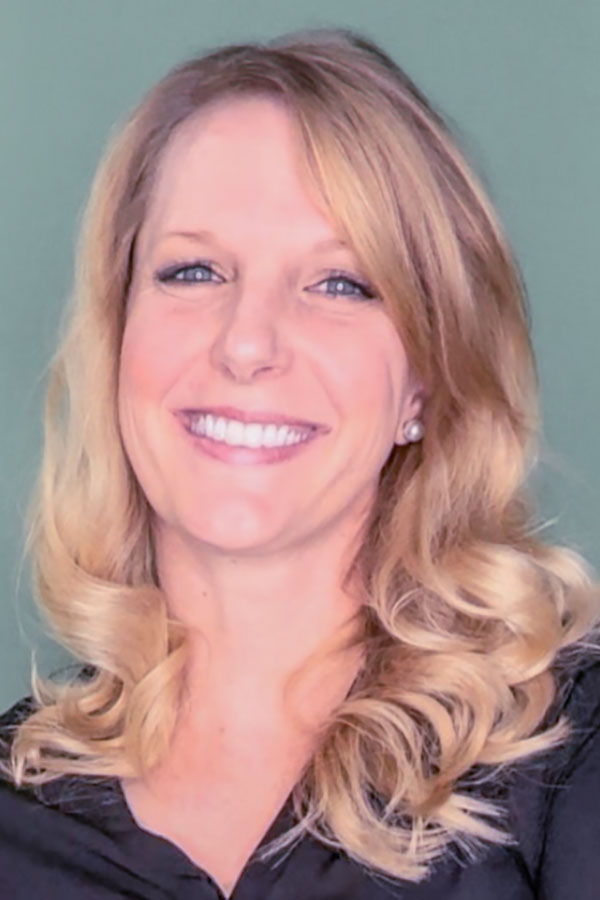
Kelly Williams, 42, sponsored Carlos in 2021.
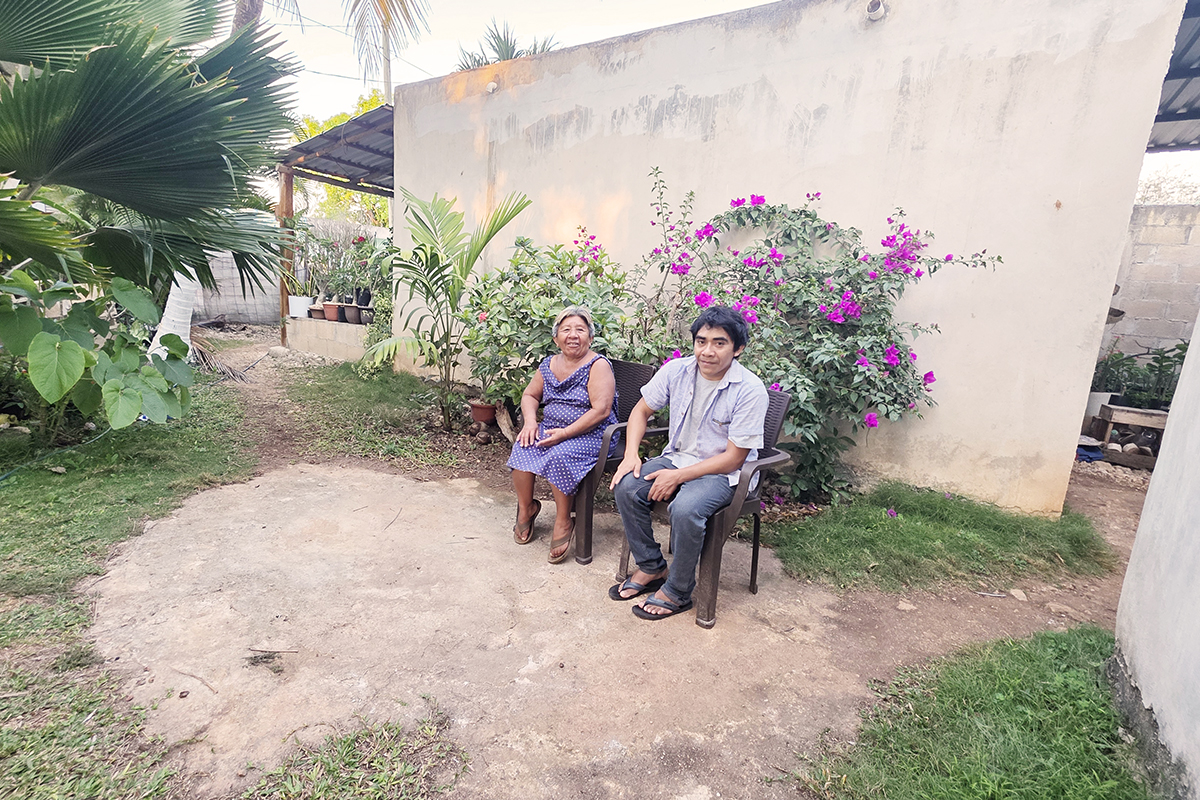
Carlos and his mother María, 65, in front of their home in Mexico. María raised her five children alone and often struggled to feed and educate them and provide for the healthcare Carlos needed for his medical conditions.
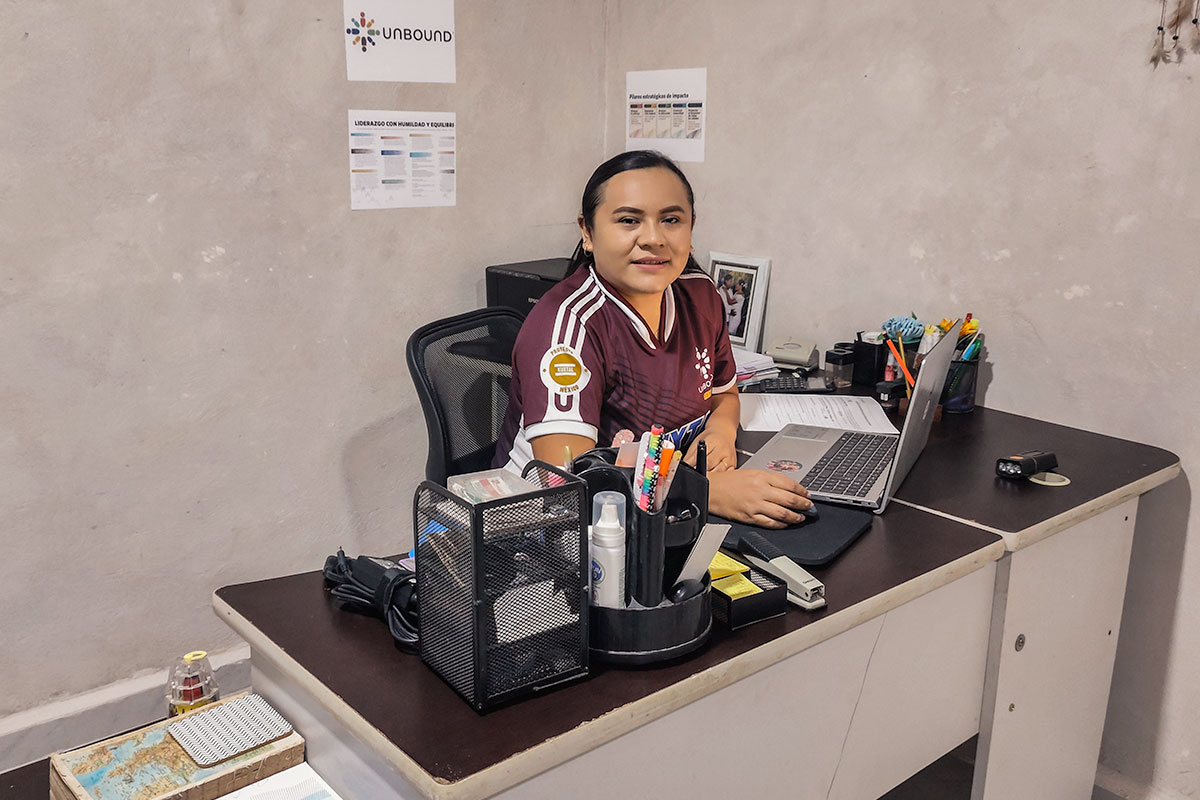
Unbound Kuxtal program social worker Alma Cristina Medrano serves Carlos’ community, in which nine other sponsored individuals have special needs. The local program is attentive to those with special needs and sometimes sees it necessary to use Unbound’s Critical Needs Fund to help families in times of medical crises.
Letter writing, a kind heart and a dream realized
Working with soil, plants and nature has been scientifically proven to offer positive benefits for a person’s mental health and psychological well-being.
Gardening can be a powerful therapeutic tool, with the ability to reduce depression and anxiety, while improving cognitive function and happiness.
María said Carlos’ moods can be unpredictable; he can get upset easily and often likes to spend time alone. Tending to his plants helps him focus and calms his mind.
Carlos works with his brother as a guard at a local workshop and as a farmhand on a ranch. But 10 years ago, he also decided to begin producing ornamental and desert plants from home, and he sells his creations seasonally in his community.
“I would like to have a nursery one day,” said Carlos about a dream he has. “I would put up a wall in front of our home with the name of my nursery, so more people know I have plants. I would call it ‘Vivero Las Palmeras’ (The Palm Tree Nursery) because I have palm trees at the entrance.”
Williams and Carlos exchange letters three or four times a year. At first, Williams said, their communication was like two strangers trying to learn how to speak to one another. But eventually, a shift occurred.
“Carlos is very kind and thoughtful,” Williams said. “He remembers things about our past conversations and always uplifts me. It was eventually like two friends connecting, sharing and checking in on one another.”
It was in one of these letters that Williams discovered the depth of Carlos’ passion for growing plants after she expressed her frustration with failing to grow some of her own.
“He wrote me a little thesis about what I should do,” Williams said fondly with a laugh.
[Our letters] were eventually like two friends connecting, sharing and checking in on one another.
— Kelly Williams, Unbound sponsor
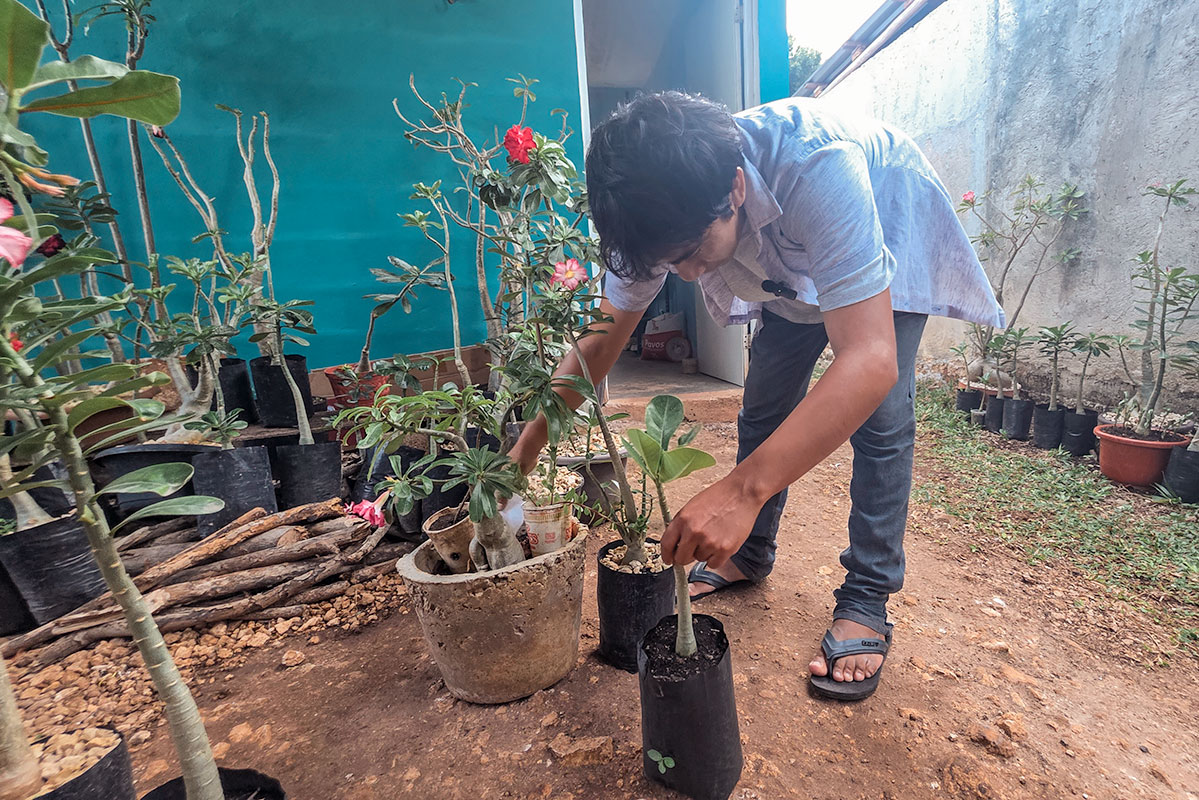
Carlos’ favorite plants to grow and tend (and his bestsellers) are his ornamental flowers, which bloom seasonally and like the rain.
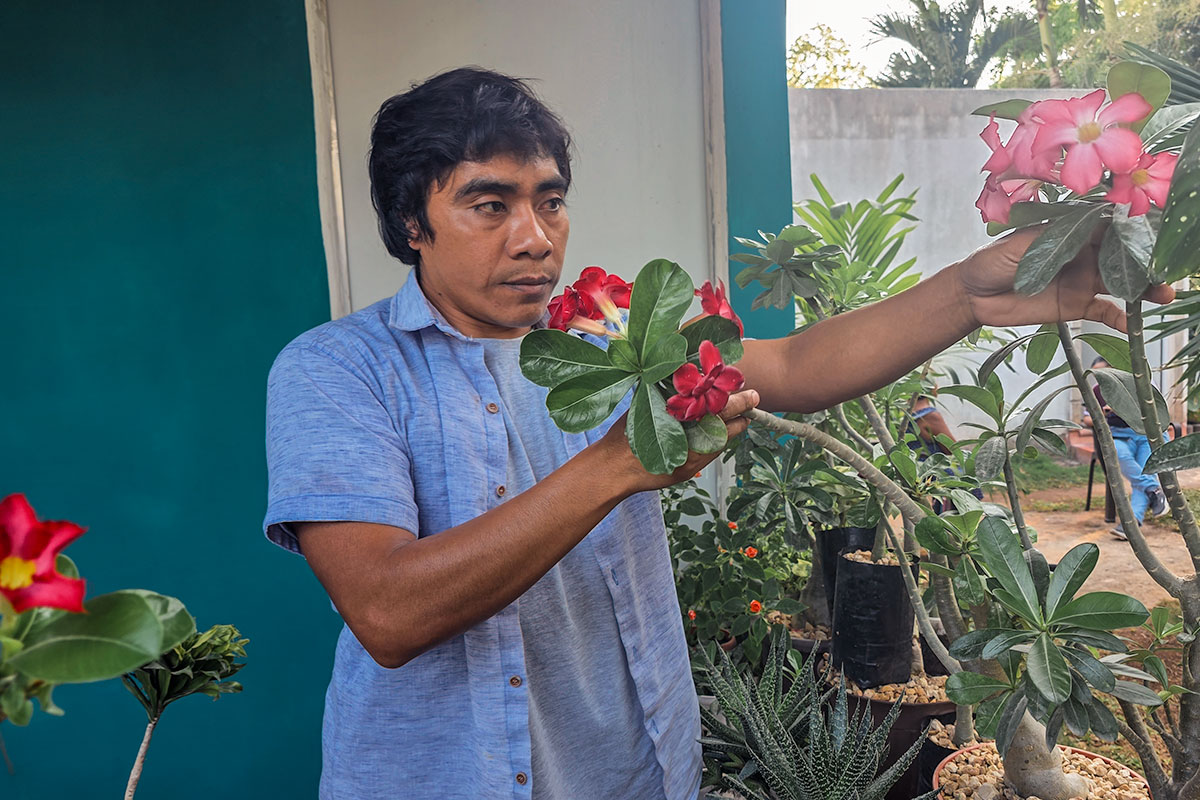
Carlos grafts and pollinates many of his own plants to grow more and uses natural fertilizer.
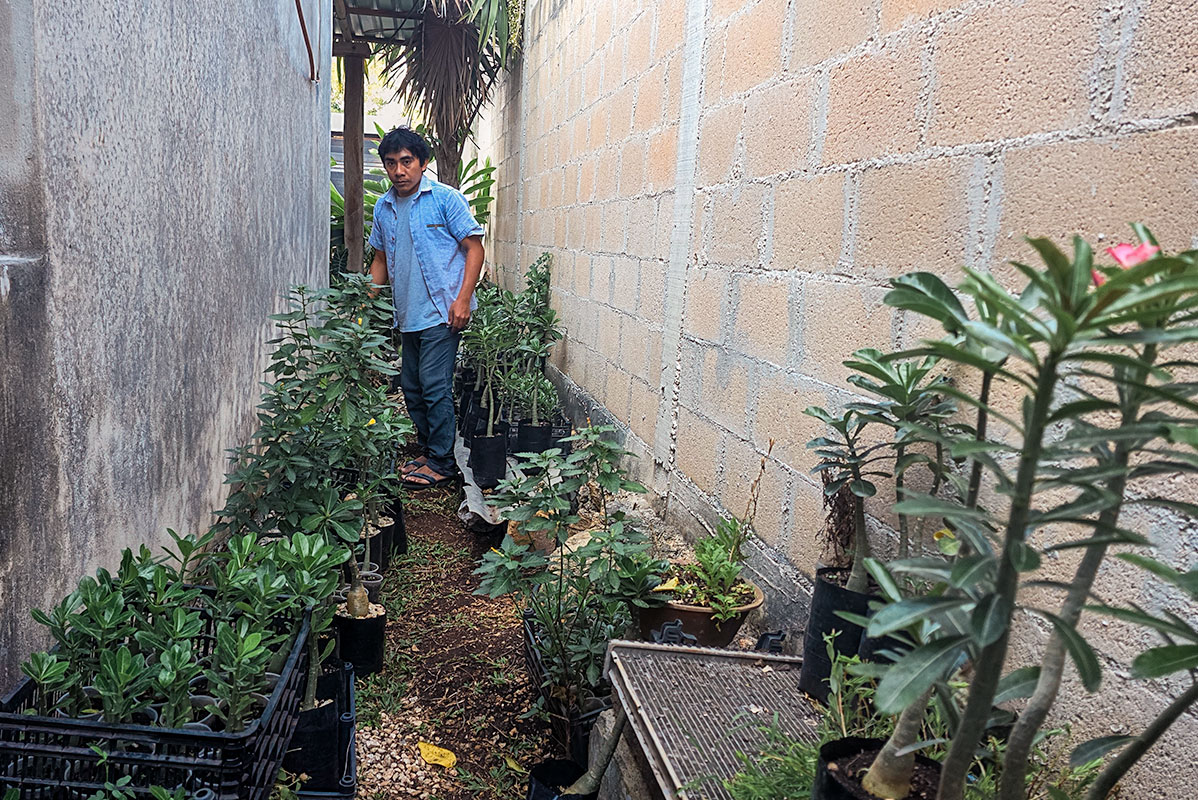
In the blooming season in March, Carlos makes on average between $280-$570 selling ornamental and exotic plants, the profits of which he uses to help his mother pay any medical bills he has.
Several years into their friendship, Williams learned about Carlos’ desire to have a nursery and that he wanted to use the income generated from plant sales to help his mother pay for his medical bills.
Partnering with another sponsor and collaborating with Unbound’s Sponsor Support, Williams was able to send funds to Carlos to support the construction of a designated spot for his plants.
“It was so nice to have an entrepreneurship connection with Carlos and to help him in a way that will improve his health,” Williams said.
With the funds, Carlos and his family constructed a covered area attached to their home where Carlos’ plants could have protection from direct sunlight (many of his plants require shade) and from floodwaters during the rainy season. Carlos also purchased a wider variety of plants so that he could experiment with growing other types and expand his product offerings.
Carlos is saving now to buy a plot of land all his own, where he can grow even more plants, and he said that sponsorship keeps him motivated.
“She [my sponsor] has a good heart,” Carlos said. “I thank her for everything.”
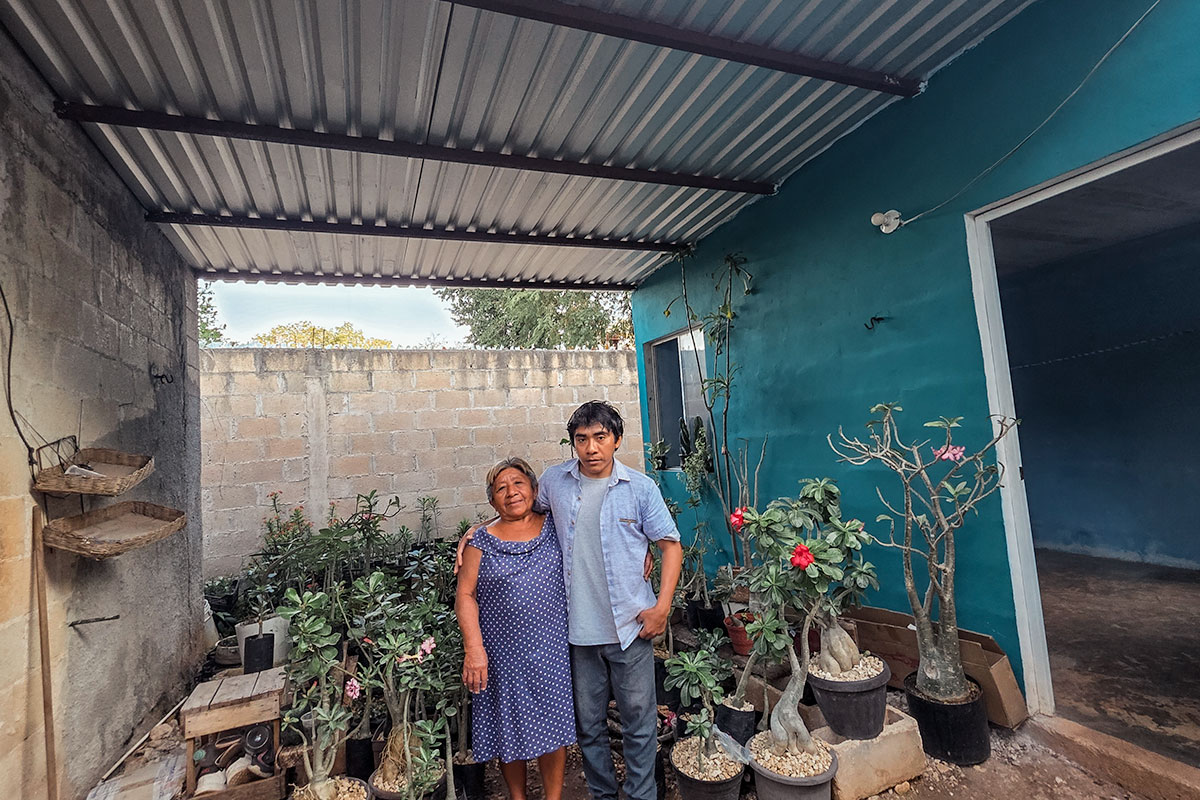
Carlos and María stand beneath one of the covered structures that they put up using the funds from Carlos’ sponsor. The roof, made of wood and sheets of zinc, gives Carlos’ delicate flowers shade they need from the sun while keeping them from getting flooded during times of rain.
Bringing sponsorship full circle
Human to human connection is important to Williams.
“There’s good science on how human to human connection is inspiring, healthy and uplifting for us,” Williams said. “If you really want to know the impact your sponsorship is having, you’ve got to talk to the person you’re sponsoring.
“I know that improving Carlos’ life is improving his whole family, and I have no doubt that positivity is rippling out and helping his [wider community].”
One of Unbound’s strategic pillars is to promote the well-being of all ages, with particular focus on expanding access to spaces for inclusion and psychosocial support for elders. In mid-2025, Williams embarked on an Unbound Awareness Trip to Guatemala with the intent of seeing in person how improving someone’s socioeconomic status could then improve their health.
She spent a week learning from local staff and mothers groups, meeting families and witnessing the impact firsthand. She called it “a week of positivity and hope.”
“I was blown away by what I learned; it was so much more than I thought it was,” Williams said. “When you first sponsor, it seems like an individual experience, but it is truly a community. Every individual I interacted with was so proud of what they had accomplished with Unbound.”
The experience solidified for Williams that she and other Unbound supporters are partners on the journey with families as they design their own paths out of poverty, and she encourages others to consider sponsoring.
“Children are our future, but elders, they are the wisdom to why we are all here,” Williams said. “They’re an important part of our community, so I would encourage more people to sponsor an elder.”
In the summer of 2026, Williams, accompanied by a friend, will take another trip abroad — this time an individual sponsor visit to Mexico, to meet Carlos and his family in person.
And she already has an idea of how the experience will go.
“We’ll talk plants,” she said.
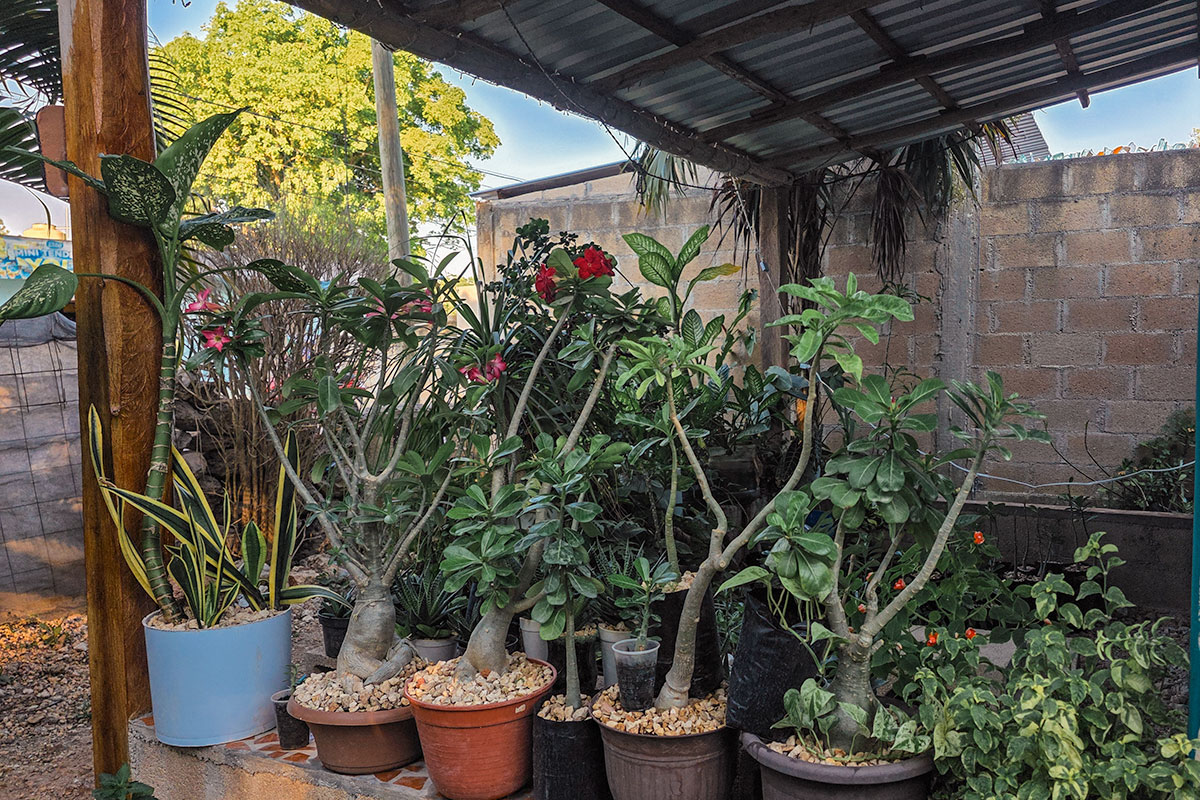
The family’s outdoor areas of their home are filled with Carlos’ plant creations.
Unbound’s regional reporter in Guatemala, Oscar Tuch, along with Unbound Kuxtal staff, contributed information and photos for this story.